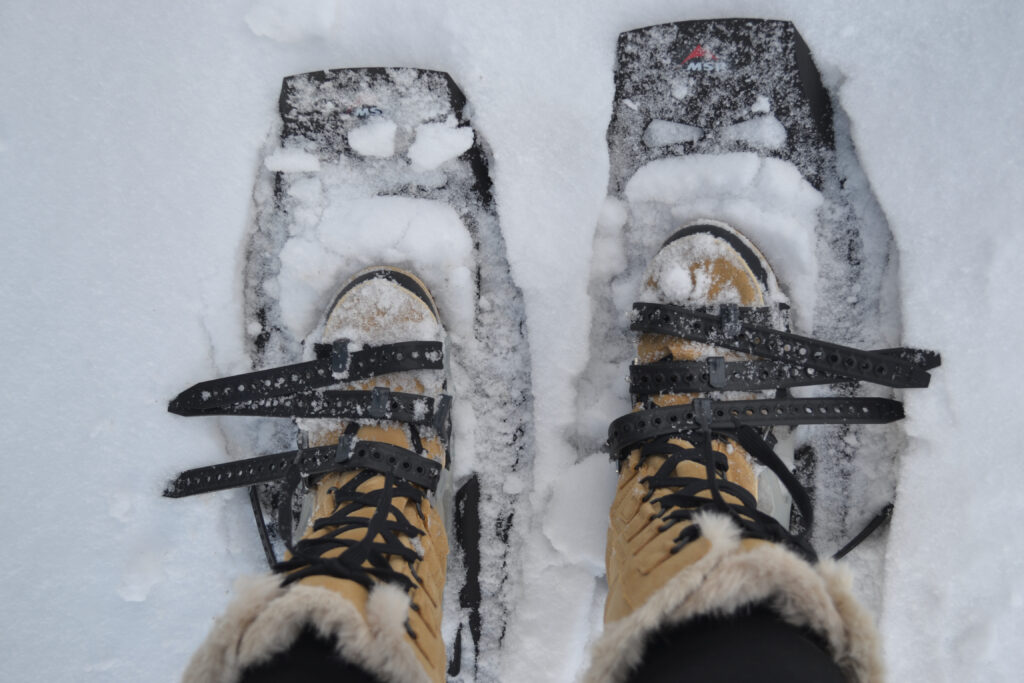
Buying your first pair of snowshoes can feel weirdly complicated for something that’s basically “walk on snow.” Suddenly you’re staring at traction systems, weight ranges, deck shapes, heel lifts… and wondering if you need the snowshoe equivalent of a spaceship just to shuffle down a groomed trail.
You don’t.
Most beginners only need a few simple decisions: where you’ll snowshoe most often, how much traction you’ll need, and what size actually matches your body + your gear. Get those right and you’ll be set for years—whether you’re heading out for a cozy packed-trail wander, breaking trail in fluffy snow, or chasing viewpoints on wind-scoured hardpack.
In this guide, I’ll walk you through exactly how to choose snowshoes (without the jargon), what features matter and what’s just marketing, and a couple of easy “if this… then that” recommendations so you can buy once and love them.
Ads are how we keep our blog free for you to enjoy. We also use affiliate links; if you make a purchase through them, we may receive a small commission at no cost to you.
Choosing the Best Pair for YOU
Step 1 – How you will be using your snowshoes?
🔹Recreational use would be weekend warriors, going on trails or romping around the woods on flat or rolling terrain.
🔹Performance use would be trail runners, mountain climbers, and backcountry multi-day trekkers who want to go fast, climb high and endure all types of terrain.
Step 2 – What type of material and features are best for your use?
🔹 Recreational snowshoes can be made of plastic, lightweight aluminum or wood
🔹 Performance snowshoes are usually lightweight aluminum.
Plastic quality varies widely. Make sure it is thick and well molded. If you decide to go plastic, spend the extra cash and buy from a quality brand.
Lightweight aluminum is the most commonly used material because it is light yet very durable and holds up well under cold temps. Most aluminum snowshoes then have a decking made of synthetic rubber or plastic-like material that is cold resistant.
Wood snowshoes are obviously made of various types of wood and the decking could be made of hide or synthetic material.
Recreational snowshoes can be either pivot or fixed, have less aggressive crampons or none at all, come in many shapes and with many styles of bindings. Get what you think will work best for you.
Performance snowshoes should be lightweight, pivot systems are important to reduce fatigue, consider the heel risers and aggressive crampons with bindings that will fit the specific type of boot you will use with them.
Snowshoe Anatomy
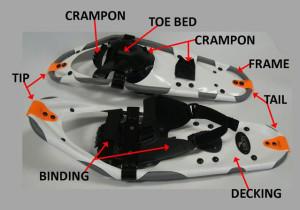
Frame
It all starts here. The frame is the foundation of the snowshoe. It dictates the size, is where the decking attaches and are now designed specifically for men, women, and kids. The frames shape factors in where stride and snow type are concerned.
Decking
This allows you to float on the snow. Today, most manufacturers use synthetic rubbers or plastics and this is where you want to consider durability as this area is most prone to tears and punctures.
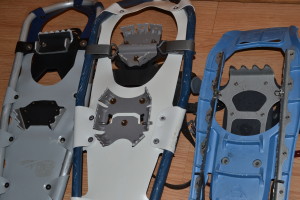
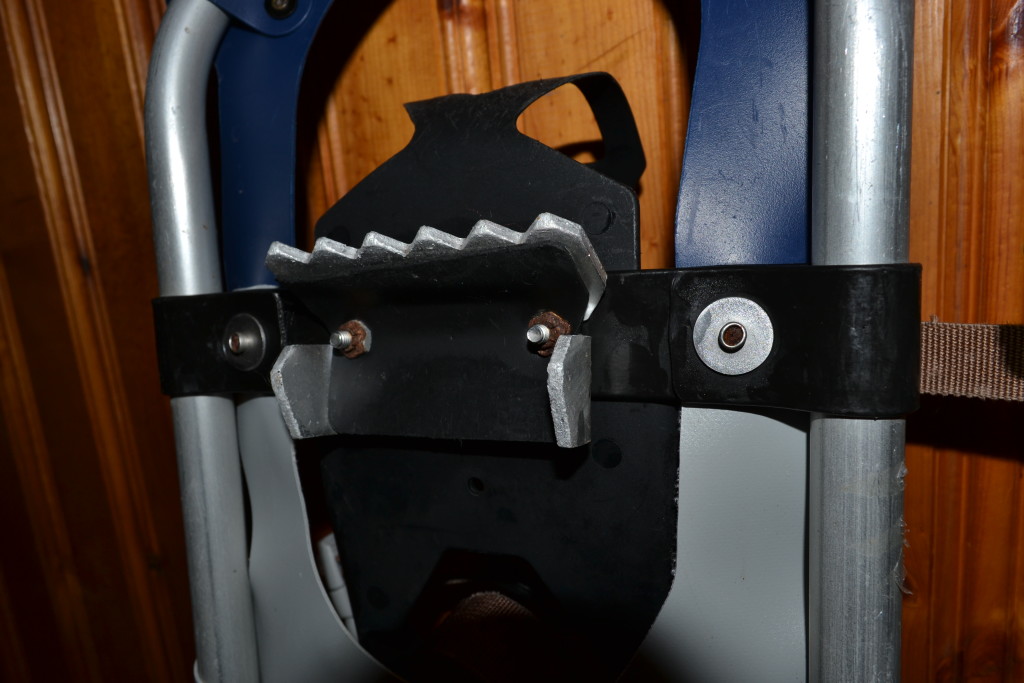
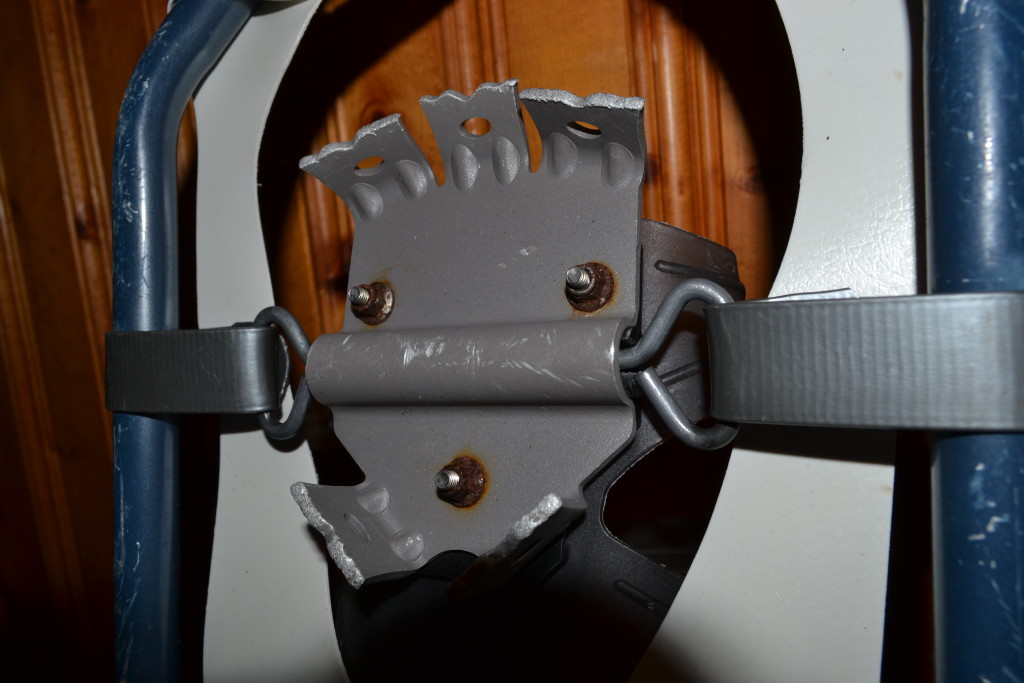
Crampons
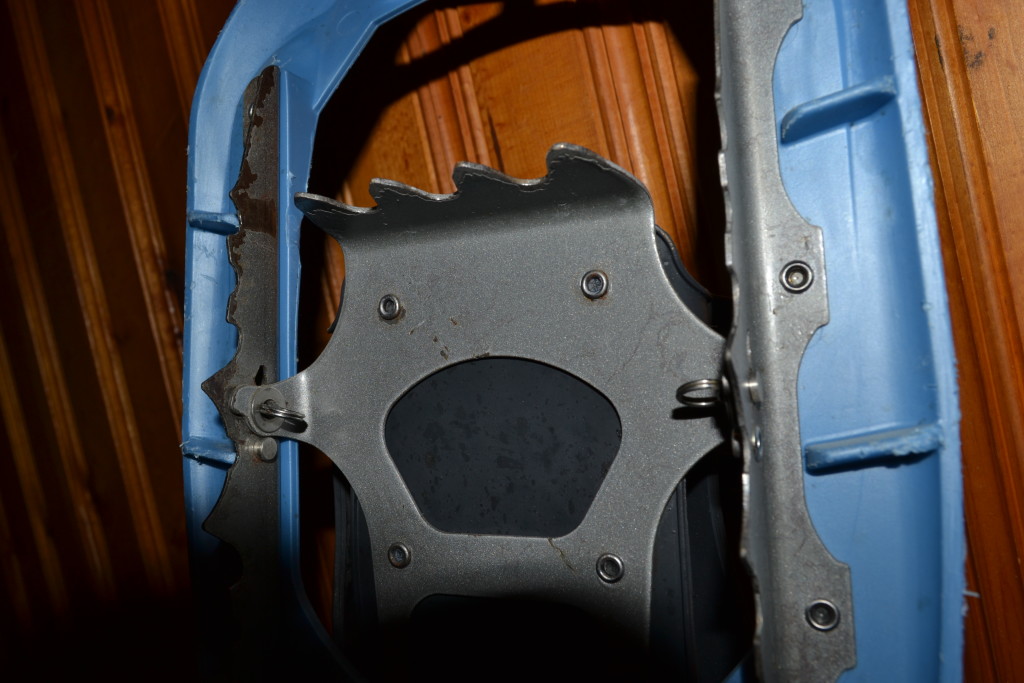
These are under your foot and provide traction on hard packed snow or ice. Either made of hardened aluminum or steel and vary in placement and size depending on the intended use. Traditional “Bear Paw” snowshoes do not have crampons.
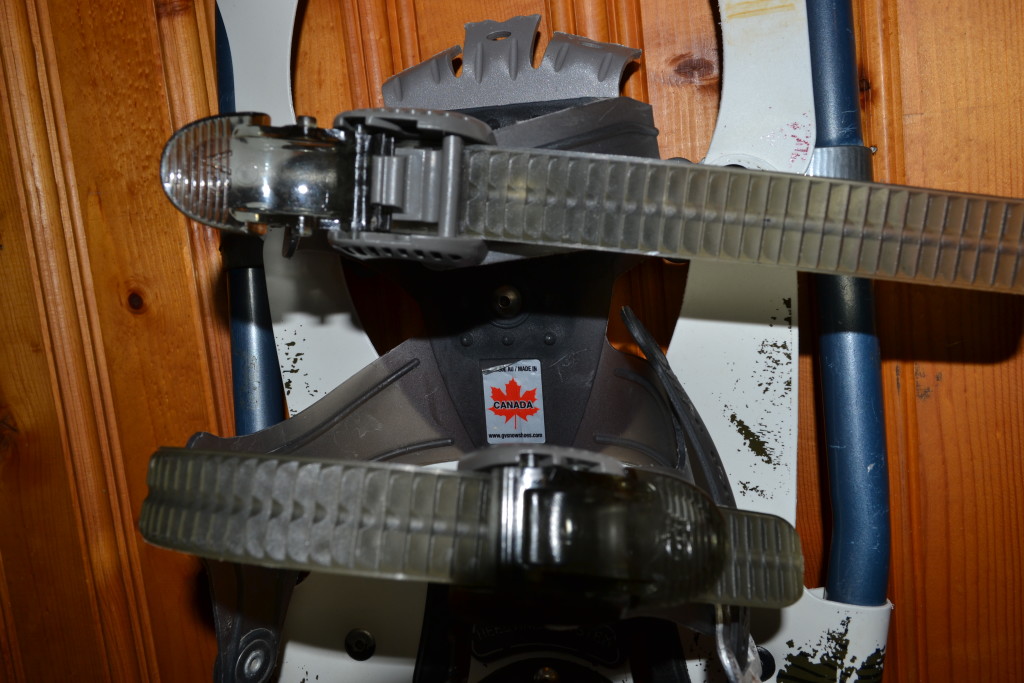
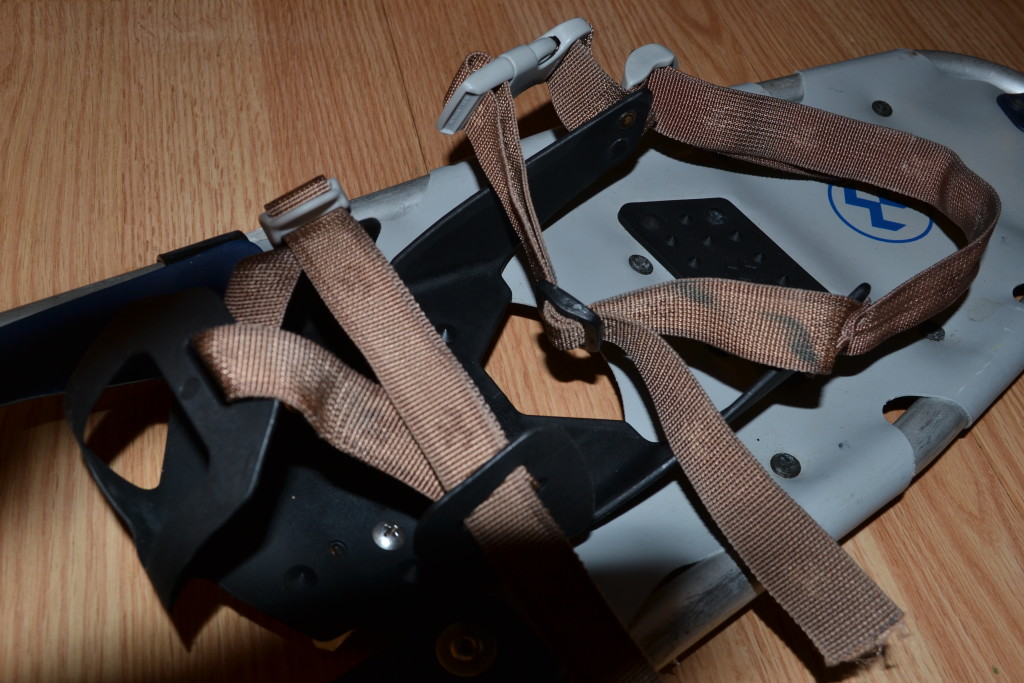
Bindings
These attach the snowshoe to your foot. There are many types of bindings, so try a bunch and decide what style you prefer and will be easy to use with thick mitts or gloves.
Rotating vs. Fixed Pivot Points
This is referring to the foot/ binding in relation to the frame/decking. If there is a pivot
Step 3 – What size do you need?
Sizing is based on 3 factors;
🔹 Weight – Your body weight plus any equipment equals the total weight needing to be distributed by the snowshoe.
🔹 Snow Density – will you stay on packed trails (can use narrower snowshoes) or spend most of your time in deep, fluffy snow (will need longer and/or wider snowshoes). This will help determine the size but also the frame shape.
🔹 Maneuverability – smaller snowshoes are easier to move around obstacles (when bushwalking) where larger snowshoes allow for optimal floatation in wide open spaces.
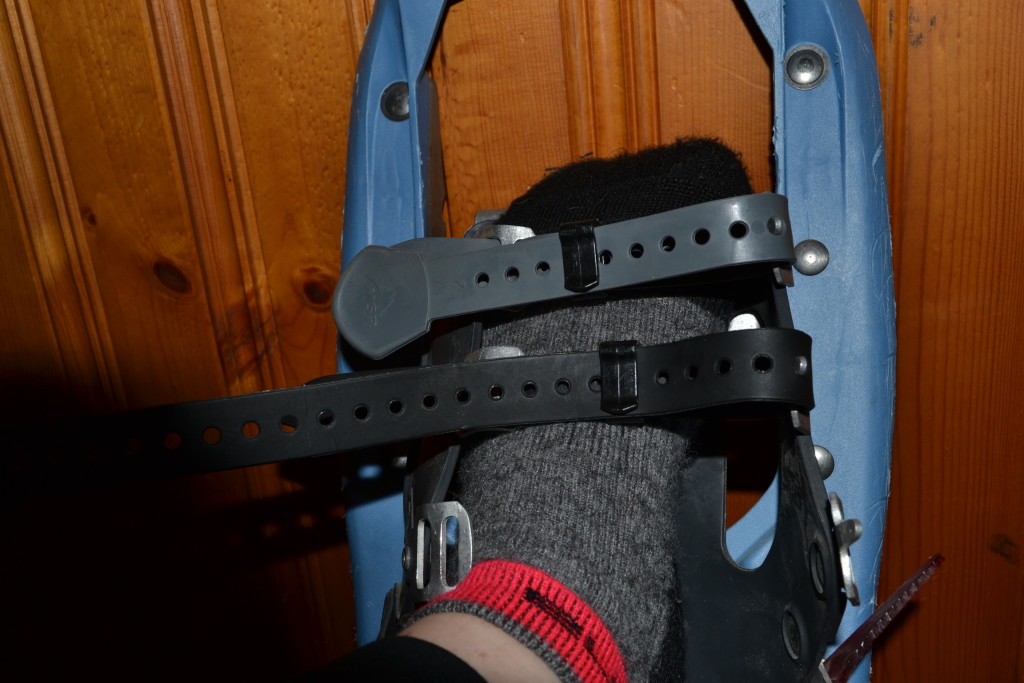
Sizing the Bindings
Bring the boots you want to snowshoe in to make sure the bindings fit snug.
Step 4 – Price
We all have budgets, so based on the above needs, you can start to see what is in your price range. Expect to spend $100CAD+ for a pair adult snowshoes and $60-$130CAD for a pair of kid snowshoes if buying new.
Kid Specific Considerations
🔹 Go for small (narrow+short) frames for maneuverability for young kids.
🔹 Get easy to use bindings (and make sure they can use them with mitts on).
🔹 Let them pick the
Recommended Brands
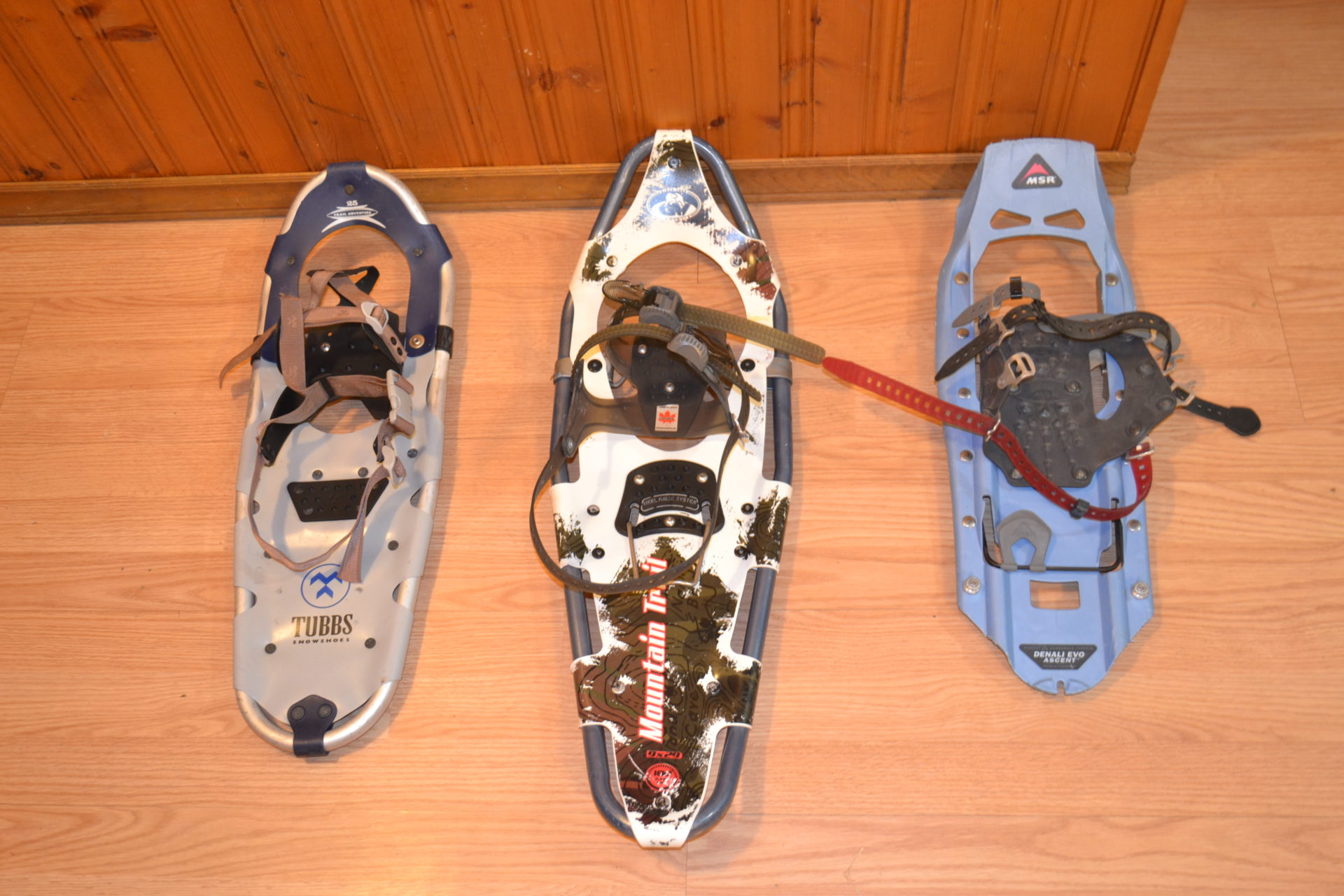
I have MSR Evo snowshoes and love them! These are the best for areas with windblown, hard packed snow but add the tails, voila! Now they are powder ready.
Tubbs Snowshoes are very popular and can usually be purchased locally. If you prefer to shop on Amazon, check out the Tubbs Store here.
MEC has lots of quality brands AND has the best return policy.
I also have a pair GV Snowshoes and they have endured a LOT! This is a Canadian company, manufacturing in QC for over 50 years.
Buying Options
With many factors to consider, it is worth the time to do some extra research, read reviews and ask people you know who snowshoe what they like and why.
If you’re purchasing locally at a store, ask the sales rep lots of questions, have them show you the different features, try lots on, and don’t feel obligated to buy right away!! For ordering online, just use the sizing guidelines available on the retailers website. Either way, watch for sales and keep an eye out for good deals. Remember to check return policies and warranties!
You can also consider looking on
Now you’re armed with some basic knowledge and tips on what to look for and consider. Get on the go and get ready for an epic snowshoe season! See ya on the trials!
What type of snowshoes do you like and why?
Recommended Reads
Ultimate Guide to Hiking Gros Morne Mountain Trail (James Callaghan Trail)
Gros Morne Mountain is the iconic summit hike in Gros Morne National Park, Newfoundland—a full-day, legs-on-fire kind of climb that rewards you with a rare arctic-alpine plateau and sweeping views over Ten Mile Pond and the Long Range Mountains. This guide covers the full route (Approach + Summit loop), spring closure dates, seasonal conditions, weather…
A Local’s Guide to February in Newfoundland
February means winter is here. Snowmobile and cross country ski trails are groomed, the ski hills are open and there is plenty snow to play with. This month is full of excitement as the locals are excited to get out in the snow and play. Come out and join in the wintery, snowy FUN! February's Weather…
Hike This: Gros Morne Mountain
Hiking the James Callaghan Trail up and over Gros Morne Mountain in the summer is a popular activity. Likely the most popular trail in Gros Morne National Park but it’s even better in the winter! There are less people there, the views are just as amazing (if not better), and the trail is easier to…